
Unlocking Stars: High- res Spectroscopy
and Asteroseismology
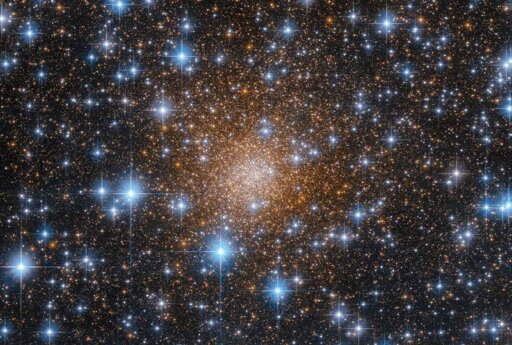
Exploiting the full potential of star clusters
The characteristics of HRMOS make it ideal for the study of crowded fields, such as star clusters, giving the possibility of seeking answers to long-standing open questions, such as the chemical and dynamical evolution of stars and star clusters, including studying the formation and evolution of star clusters, multiple populations in globular clusters, and the kinematic and multiplicity properties of stars in various clusters.
An important aspect is the combination of HRMOS spectroscopy with complementary observations from space missions, like PLATO. We are also working to establish synergies with the HAYDN mission, which will be proposed to ESA. HAYDN will provide precise asteroseismic measurements in crowded stellar fields, such as star clusters, where traditional methods of asteroseismology face significant challenges due to the density and complexity of these environments. By combining HRMOS’s spectroscopic capabilities with HAYDN's asteroseismic data, we will be able to probe stellar interiors and evolution with unmatched detail, allowing us to explore fundamental aspects of stellar structure and evolution in a variety of stellar populations.